Stay in Historic Wooden Villas in Jūrmala

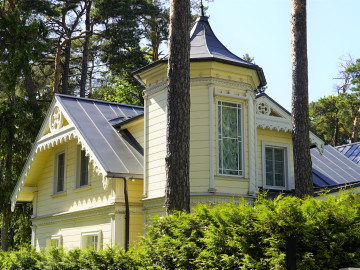
Jūrmala boasts one of the richest wooden architecture landscapes in the Baltics, where late 19th and early 20th century resort villas and summer houses continue to define the city’s spatial and visual identity. Turrets, verandas and finely crafted wooden details create a distinctive architectural language that is best experienced at a human, residential scale.
Staying in these buildings offers more than accommodation by the sea – it allows you to inhabit this architectural environment, not just observe it. It is a chance to experience a historic seaside resort that remains alive and tangible in everyday life. Below are selected accommodation options available on Airbnb and Booking platforms.
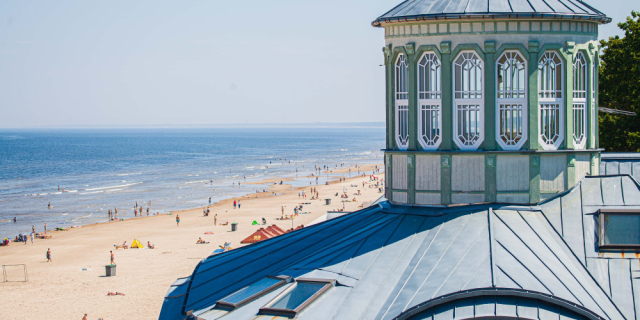
Beachfront Art Gallery Mansard One Bedroom Suite (Majori, Pilsoņu Street 1)
Located in the former Emilija Rācene bathing establishment – a significant witness to Jūrmala’s resort infrastructure. An asymmetrical volume with a cylindrical tower and semi-circular veranda reflects features of Historicism and Art Nouveau. A rare opportunity to stay in wooden architecture directly on the seafront.
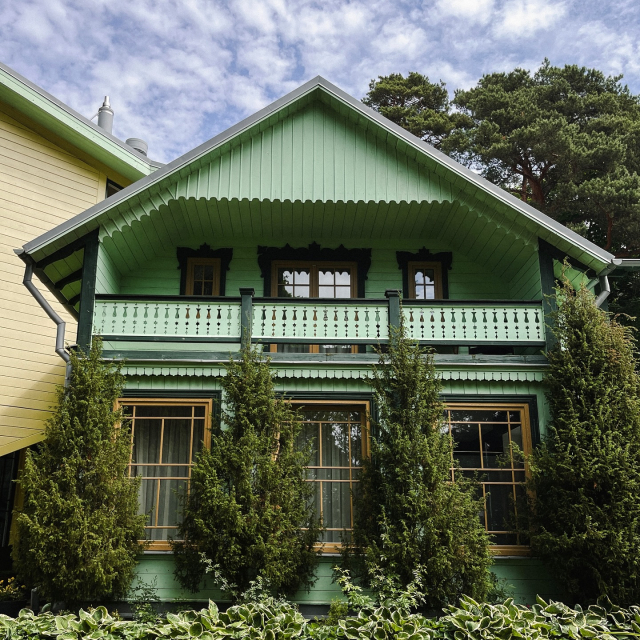
Villa Joma (Majori, Jomas Street 90)
An early 20th-century wooden villa on Jomas Street, preserving the scale of historic resort development. The Art Nouveau-inspired garden pavilion adds a refined atmosphere. Here, architecture is not just a backdrop – it actively shapes the experience of staying.
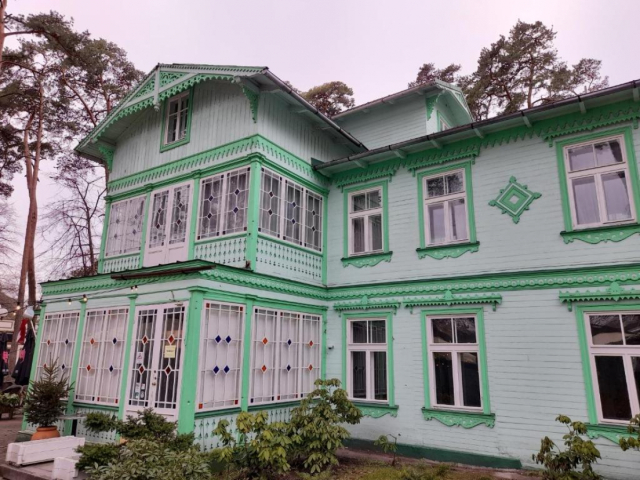
Hotel Marino (Majori, Jomas Street 55)
A wooden villa with spacious verandas and large windows that fill interiors with light. Decorative façade details and rhythmic composition preserve the classic character of Jūrmala’s resort architecture. A place where the lightness of a historic summer house can still be felt in the city centre.
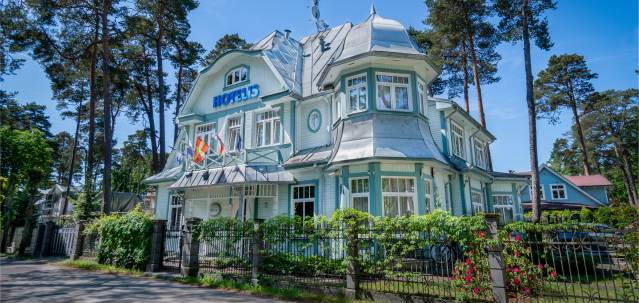
Parus Boutique Hotel (Majori, Smilšu Street 2)
A 1920s wooden villa with an asymmetrical composition and a distinctive silhouette. The tower and dynamic rooflines create a recognisable architectural identity. Compact yet expressive, located close to the sea.
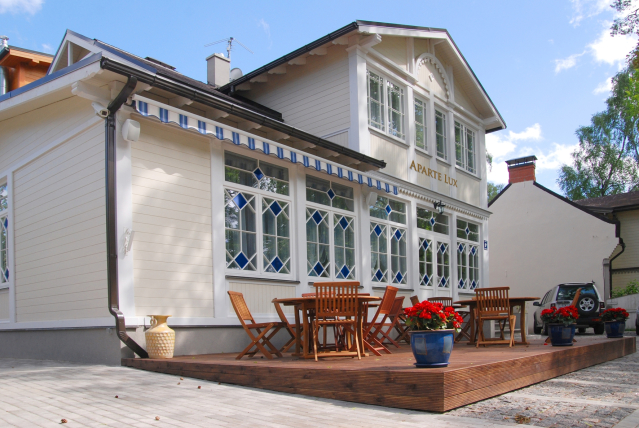
Aparte Lux Jūrmala (Majori, Jaunā Street 9A)
A wooden building with a glazed veranda and a light-filled façade. Elegant window detailing and proportions maintain the characteristic scale of Jūrmala. Quiet, harmonious architecture for a relaxed stay.
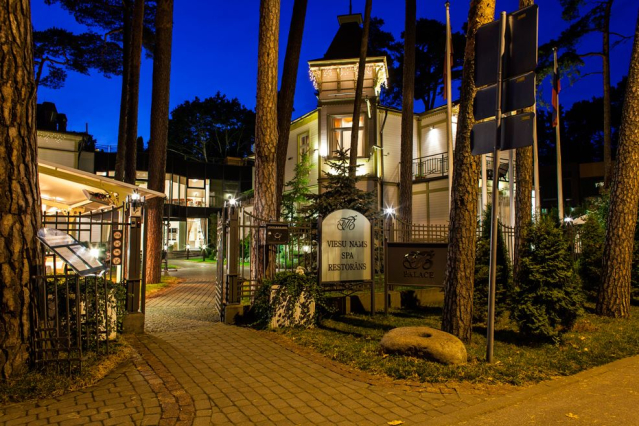
TB Palace Hotel & SPA (Majori, Pilsoņu Street 8)
A 1908 villa with a symmetrical composition and two towers. The rhythm and proportions of the façade create a distinctly representative and refined impression. One of the most luxurious examples of wooden architecture in Jūrmala.
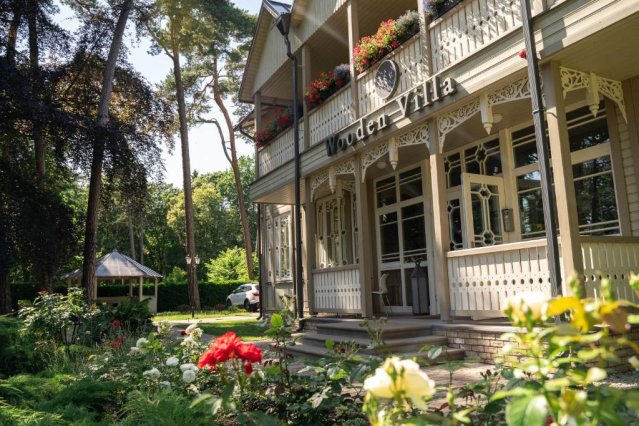
Wooden Villa Apartments (Majori, Jūras Street 53)
A two-storey wooden villa featuring balconies, gables and rich ornamental detailing. Spacious verandas and large windows give the building an open, summery character. A classic example of Jūrmala’s resort architecture.
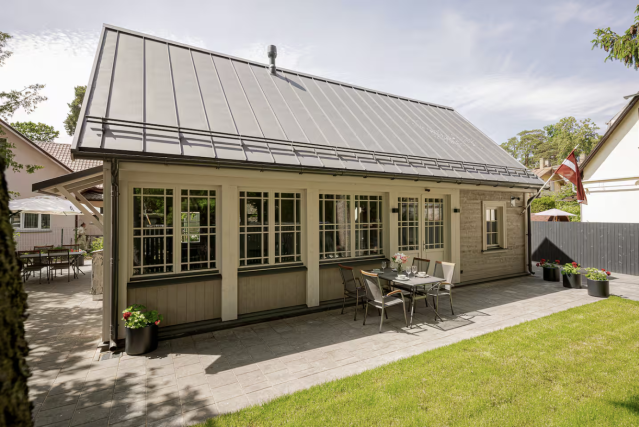
Apartment with Terrace, Beach 5 min (Majori)
A duplex apartment in a wooden building with the characteristic exterior of Jūrmala architecture. A contemporary interior is combined with a historic façade. The private terrace adds a sense of openness and ease.
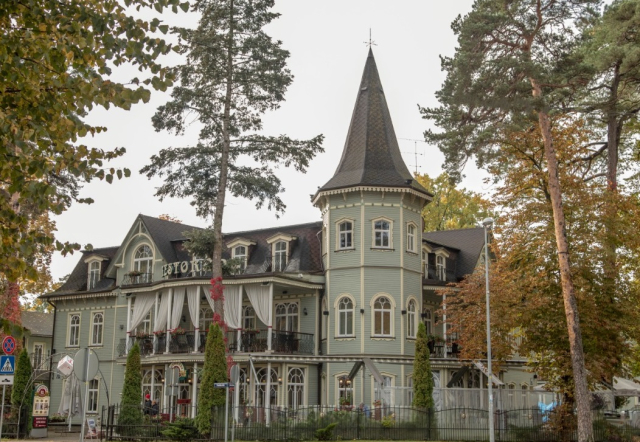
Pegasa Pils Spa Hotel (Dzintari, Jūras Street 60)
An expressive Art Nouveau villa with a tower and richly articulated façade. Its silhouette and decorative elements immediately stand out within the active urban setting near the historic Dzintari Concert Hall.
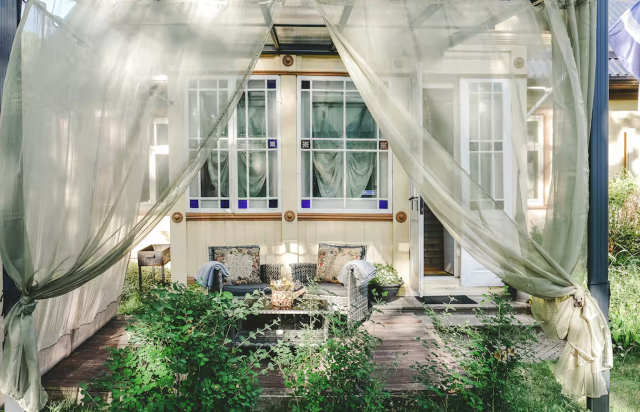
Villa Irbe (Dubulti)
A collection of small, elegant apartments in historic fishermen’s houses in Dubulti – one of the most authentic layers of Jūrmala’s coastal development. Renovations carefully integrate modern comfort while preserving the character of the place. Here, not only architecture but also the surrounding environment – historic seaside buildings and the nearby sea – becomes part of the experience. Villa Irbe; Villa Irbe 2; Villa Irbe 3.
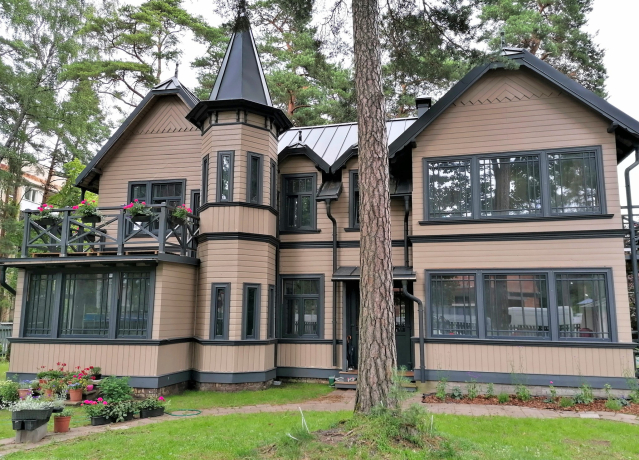
Photo: Jūrmala Culture Space and Design Centre (JKVDC)
Dacha Mini Hotel (Bulduri, Rēzeknes pulka Street 20 k-1)
A 1926 wooden boarding house with towers and an asymmetrical composition. Restoration has preserved and revived its decorative elements, maintaining the building’s original character. Historic architecture that continues to serve its original function.